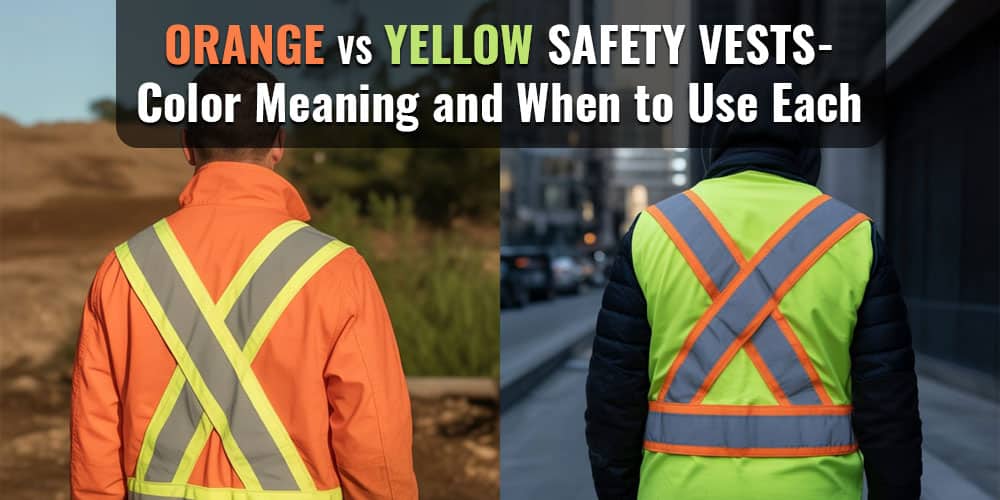
Choosing between an orange safety vest and a yellow-green vest isn’t just about preference. Color influences how quickly people spot you against different backgrounds. Orange pops against natural landscapes and most road settings, while yellow-green excels in low-light and urban clutter. Both colors are approved for roadways and work zones when paired with reflective striping, but each shines in different conditions.
This guide explains when an orange safety vest is more suitable, when fluorescent yellow-green is the better choice, and how job type, lighting, and background contrast should inform the decision. You’ll also see how standards tie color to visibility performance, so crews select vests that match real-world risks, such as traffic speed, weather, and night work. By the end, you’ll know how to choose color plus the correct class rating to help workers stand out quickly to drivers, equipment operators, and co-workers.
Why High-Visibility Matters
A high-visibility safety vest helps workers get noticed sooner, which buys reaction time where it counts. Fluorescent pigments convert invisible UV into visible light, so fluorescent yellow-green and fluorescent orange-red appear brighter in daylight and dusk. Retroreflective tape returns headlight beams to the source, which is critical at night.
The right high-visibility vest, combined with reflective striping, improves detection distance for drivers and equipment operators, reducing near-misses. The construction industry reported 1,069 fatal injuries in 2022, with approximately 412 resulting from falls, slips, and trips, as per the BLS. Many of these incidents occur in dim or complex environments, underscoring the need for high-visibility apparel.
Pair color choice with the right class rating- ANSI Class 2 for moderate traffic speeds and ANSI Class 3 when higher speeds, poor weather, or night work demand more background material and reflective area. Better visibility is a practical risk control that supports safer decisions on site.
ANSI/ISEA 107 Standards
The ANSI/ISEA 107 standard defines the performance requirements for high-visibility apparel, enabling buyers to match gear to the associated risk. Classes reflect the required background fabric and reflective tape. Class 1 is for low-risk areas with slow equipment or limited traffic. ANSI Class 2 increases the visible area for roadway work at moderate speeds. ANSI Class 3 adds sleeves or increases surface area for high-speed roads, nighttime work, or adverse weather conditions where maximum conspicuity is required. Types indicate the work setting- Type O (off-road) for warehouses, yards, and sites without traffic- Type R (roadway) for public access roads- Type P (public safety) for law enforcement or incident response. Both fluorescent yellow-green and fluorescent orange-red meet the chromaticity values required by the standard; therefore, the color choice should consider both background contrast and the task. Pair the right Type with the appropriate Class, and select a hi-vis vest that meets labeling and retroreflective performance for your conditions under ANSI/ISEA 107.
Features of Orange Safety Vests
Orange works best when background contrast is critical and moving vehicles need fast recognition. Visibility performance also depends on a proper fit, well-maintained retroreflective striping, and the correct class. Remember the human factor- comfort, pocket layout, and fabric choice all influence daily wear, which ultimately sustains compliance in changing weather and lighting conditions.
Best Use Cases for Orange
Orange excels where you need standout contrast at a glance. In snow, the hue cuts through white glare, especially with bold reflective tape outlining the torso and shoulders. In desert or sandy work, orange resists visual blending that can occur with fluorescent yellow-green, aiding work zone safety for survey and utility crews.
At dawn and dusk, orange pigments remain vivid against purplish skies and shadowed ground while retroreflective striping kicks in under headlights. For equipment differentiation, orange can designate ground personnel while yellow marks operators, or vice versa, creating quick role recognition in busy yards.
Choose ANSI Class 2 for moderate-speed sites and ANSI Class 3 when traffic speeds, poor weather, or night work require a larger background area. Consider a surveyor vest if mapping or inspection tools need organized storage. Where snag risks exist, a breakaway vest can reduce entanglement. If heat is a concern, opt for a mesh vest to improve airflow- for durability against abrasion or printing, choose a solid fabric vest.
In all cases, check the vest size range for over-jacket fit and add custom safety vest identifiers for supervisors or flaggers. This color strategy supports clear visual cues for mixed fleets and multi-contractor sites.
Features of Yellow Safety Vests
Yellow vests stand out in complex street scenes where glare, signage, and crowds vie for attention. The right class, fit, and maintenance plan matter as much as color. Keep retroreflective striping clean, replace worn reflective tape, and verify labels for ANSI Class 2 or ANSI Class 3 before deployment.
Best Use Cases for Yellow
Yellow performs exceptionally in broad daylight, overcast skies, and shaded corridors where it appears luminous against concrete, steel, and signage. In urban settings, transit, waste management, and delivery crews benefit from the color’s high salience amid traffic signals and storefront lighting.
Against foliage, fluorescent yellow-green often outperforms orange during spring and summer, giving arborists, landscapers, and utility workers an extra edge in visibility at a distance. Pair with high-grade retroreflective striping so PPE remains visible at night and in tunnels. For tasks that require notebooks, tablets, or flags, a surveyor’s vest with reinforced pockets keeps tools secure and stable. Where tear risks exist in close quarters, choose a breakaway vest. Hot conditions call for a mesh vest to vent heat, while a solid fabric vest supports durable printing for custom safety vest IDs.
Select ANSI Class 2 for moderate exposure and ANSI Class 3 when speeds rise or lighting dips. Public works teams often standardize on yellow to match vehicle livery and wayfinding, simplifying safety gear replenishment across multiple safety vest brands and a wide range of vest sizes. This consistency helps new hires recognize roles quickly, which aids work zone safety during fast-changing street operations.
Orange vs Yellow- Color Differences & Visibility
With risk understood, the finer points matter. Fluorescent chemistry influences daytime performance, retroreflective striping determines nighttime visibility, and standards dictate class selection. History and industry norms also shape color defaults. The following sections summarize how light interacts with fabric, the evolution of these rules, and which trades are associated with each hue.
Color Composition & Light Behavior
Fluorescent dyes absorb ultraviolet energy and then re-emit visible light, which makes fluorescent yellow-green and fluorescent orange-red appear brighter than standard pigments. Yellow-green peaks near wavelengths where the human eye is most sensitive in daylight, improving daytime conspicuity. Orange-red offers a strong contrast against snow, sand, and asphalt. At night, retroreflective striping sends headlight photons back to drivers, while clean reflective tape edges sharpen the human visual outline.
Industry Standards & Historical Background
Modern high-visibility apparel adheres to ANSI/ISEA 107, which originated from roadway worker safety efforts and international research on conspicuity. Early programs favored bright hues with large reflective areas, then formalized ANSI Class 2 and ANSI Class 3 thresholds and placement rules for reflective tape. Color acceptance was broadened to include both fluorescent yellow-green and fluorescent orange-red, allowing agencies and safety vest brands to align with legacy practices, climate, and fleet markings.
Use Cases & Work Environments
High-speed highways and nighttime paving often lean to ANSI Class 3 in either color, with orange common for flagging and heavy civil crews. Municipal, transit, and sanitation teams usually adopt yellow to uplift urban visibility and vehicle livery. Utilities mix both for role coding, using custom safety vest prints, surveyor vest pockets, and flame-resistant vest fabrics to match electrical or refinery hazards.
Psychological Impact & Worker Preference
Comfort and identification drive real-world wear. Crews may prefer orange for perceived authority near traffic, while yellow can feel brighter and calmer in daytime grids. Fit and vest size range, as well as mesh vest breathability and pocket layouts, affect acceptance. When workers help choose color and features, daily compliance improves, strengthening PPE culture and work zone safety across shifts.
Choosing the Right Color
Here are a few tips to choose the right colour for your safety vests-
- Start with contrast. If your background is snow, sand, or faded asphalt, an orange safety vest often separates workers from the scene quickly. In leafy corridors or dense street scenes, fluorescent yellow-green can appear brighter to drivers in daylight.
- Consider lighting next. At dawn, dusk, or night, prioritize wide retroreflective striping and high-grade reflective tape on any hi-vis vest to extend detection distance.
- Match color with traffic speed and exposure. Use ANSI Class 2 for moderate speeds and ANSI Class 3 for areas that require a more visible marking—factor in equipment color to avoid blending with machine paint or fleet decals.
- Company policy may assign orange to ground crews and yellow to operators for faster role ID, which supports work zone safety. Ensure the chosen hue is part of compliant high-visibility apparel with correct labeling.
- Finally, run a brief risk assessment that checks weather, glare, and backdrop changes across a shift. Keep comfort in mind so that crews actually wear the high-visibility safety vest with the required PPE.
A well-chosen color, class, and tape layout enhances conspicuity without conflicting with existing custom safety vest role markings or safety gear standards.
Styles, Features & Customization
Pick a build that fits the job and climate. Mesh vest styles breathe well for summer or indoor plants. Solid fabric vest shells are suitable for printing, abrasion resistance, and cold winds. Economy lines keep costs low for short-term projects. Premium lines add segmented reflective tape, stain resistance, and better hardware.
For electrical or refinery exposure, select a flame-resistant vest that meets the relevant specs in high-visibility apparel. Where snag hazards exist, choose a breakaway vest. Field roles benefit from a surveyor vest with reinforced pockets for tablets, radios, and flags. Verify the vest size range for over-jacket layering to ensure the hi-vis vest remains visible after adding rain gear.
Branding matters on busy sites, so order a custom safety vest with clear titles, color-coded trims, or department logos that do not cover retroreflective striping. Maintain the correct visibility class. Use ANSI Class 2 where moderate traffic is present and ANSI Class 3 for high-speed roads, night work, or poor weather.
Color choices include fluorescent yellow-green and fluorescent orange-red- both are valid if the garment carries compliant labels and ample tape. Consistent styles across crews help standardize PPE and support everyday work zone safety.
Top Brands & Recommendations
When comparing safety vest brands, look for consistent labeling, durable stitching, and quality retroreflective striping.
Radians offers a broad range of vest sizes and reliable economy options, ranging from premium to economy, in both mesh vest and solid fabric vest builds. MCR Safety supplies sturdy surveyors’ vest designs with generous storage.
Pyramex is recognized for its value-focused, high-visibility apparel, featuring well-designed pocket layouts. PIP provides wide distribution and steady stock across ANSI Class 2 and ANSI Class 3 models. Ergodyne delivers comfort-focused patterns that crews wear for more extended periods, which helps improve real-world work zone safety.
Kishigo is a popular choice for supervisors seeking premium tape layouts and vibrant, fluorescent yellow-green or fluorescent orange-red fabrics.
OccuNomix rounds out the list with dependable cold-weather and flame-resistant vest selections.
For role ID, order a custom safety vest with department text and barcodes placed away from reflective tape. Keep a mix of orange and yellow in stock to avoid blending with equipment paint. Always confirm the label class, check pocket strength, and plan for replacements so PPE remains clean and bright. A short trial with crews will surface fit issues before you standardize your safety gear.
FAQs
1. What sets apart yellow and orange safety vests?
Yellow offers strong daytime visibility in cities and against foliage. Orange performs well in snowy or desert terrain, at dawn or dusk, and helps distinguish walkers from yellow-painted equipment. Select the hue that contrasts most effectively with the background and fleet colors to facilitate rapid recognition and ensure work zone safety.
2. What is the color code for safety vests?
ANSI/ISEA 107 recognizes three fluorescent background colors for high-visibility apparel- yellow-green, orange-red, and red. Each meets chromaticity targets for daytime conspicuity when paired with compliant retroreflective striping. Select the color that contrasts with your environment, then confirm the garment’s class, type, and reflective tape placement on the label.
3. Should I wear yellow or orange hi-vis?
Base your choice on contrast, lighting, and equipment colors, as well as company policy and a brief site risk review. In cities or leafy areas, yellow-green can look brighter. In snow, sand, or at dawn and dusk, orange may stand out faster. Always verify ANSI Class 2 or Class 3 as required.
Resources & Further Reading
For standards and data you can cite, start with ANSI/ISEA 107 for requirements on classes, types, and performance-
- ANSI/ISEA 107 Standard (ANSI Webstore)
- BLS Fatal Injury Data 2022
- CDC NIOSH Highway Work Zone Chartbook
- FHWA Pedestrian Visibility Manual
Need compliant vests, fast shipping, and reliable PPE choices? Explore our selection of orange and yellow high-visibility vests, surveyor vests, breakaway, flame-resistant, mesh, and solid options at National Safety Gear. Find the right ANSI Class 2 or ANSI Class 3 model, complete with proper reflective tape and retroreflective striping, to outfit your crews with confidence today.