
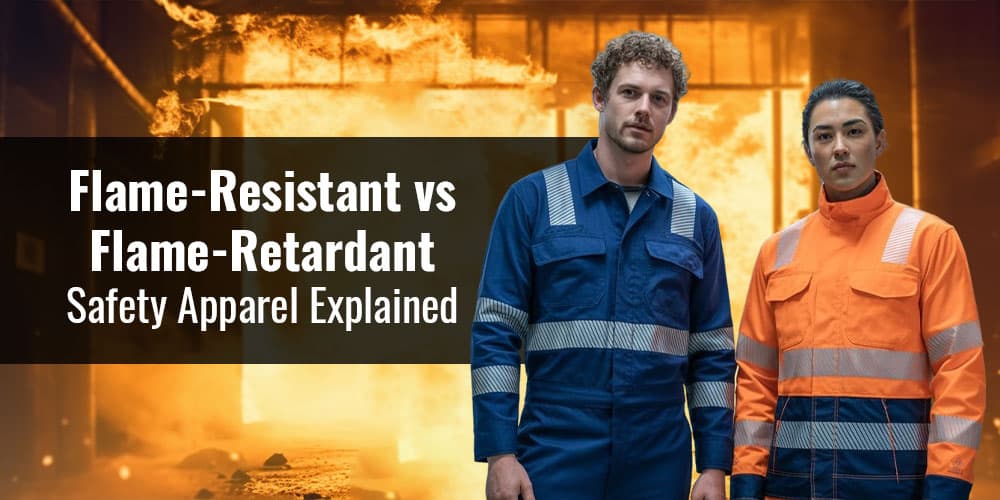
Flame-resistant and flame-retardant sound similar, but they describe two different approaches to flame-resistant clothing safety. Flame-resistant fabrics are designed from fibers that naturally resist ignition and will self-extinguish once the heat source is removed.
Flame-retardant clothing, on the other hand, begins as a standard fabric that is treated with special chemistries to slow ignition and reduce the spread of flames. Both play a key role in arc flash PPE and thermal protection programs governed by standards such as NFPA 70E, NFPA 2112, ASTM F1506, and OSHA 1910.269.
In the U.S., an estimated 5-10 arc flash incidents occur every day, with up to one fatality daily, and around 486,000 people receive medical treatment for burns each year. Non-fatal electrical injuries in 2020 led to a median of 13 days away from work. Against that backdrop, selecting and wearing the right FR apparel is not optional- it is a core safety control.
What Is Flame-Resistant Clothing?
Flame-resistant clothing is designed to resist ignition, self-extinguish quickly, and limit burn injury when exposed to short-term thermal events such as arc flashes or flash fires. Unlike everyday fabrics that can melt, drip, or keep burning,
FR garments are engineered so that once the ignition source is removed, the fabric stops burning on its own. This is central to the safety of flame-resistant clothing because it can reduce burn severity and give workers crucial seconds to move away from danger. FR clothing is not “fireproof”-it will not protect against every possible exposure or extreme, prolonged flame.
Instead, it is built to withstand realistic workplace hazards and tested against performance benchmarks, including NFPA 2112 for flash fire, NFPA 70E and ASTM F1506 for arc flash PPE, and OSHA 1910.269 for power generation, transmission, and distribution. In contrast, flame-retardant clothing describes garments made from standard fabrics that are chemically treated to achieve similar self-extinguishing behavior and performance ratings.
How FR Clothing Works
FR clothing works by interrupting the flame’s ability to keep burning the fabric. In inherent flame-resistant fibers, the fiber structure itself resists combustion and chars instead of melting or dripping. In treated flame-retardant clothing, a durable chemical finish is bonded to the fibers, allowing them to form an insulating layer upon exposure to heat and thereby slowing the release of fuel gases.
Performance is verified through tests that generate values such as the ATPV rating (Arc Thermal Performance Value) and EBT (Energy Breakthrough Threshold). These numbers indicate the amount of incident energy the fabric can withstand before the wearer is likely to experience a second-degree burn or the fabric breaks open. A higher ATPV rating or EBT value generally indicates better protection for specific arc flash PPE categories.
When employers match these ratings to the hazard levels defined in NFPA 70E, NFPA 2112, ASTM F1506, and OSHA 1910.269, FR apparel becomes a measurable control that helps reduce injury severity, medical treatment needs, and time away from work.
Types of FR Fabrics
There are different types of FR fabrics, which are listed below-
Inherent FR Fibers
Inherent FR fibers build flame resistance into the fiber structure itself, so the protection does not wash or wear out. Nomex, Kevlar, modacrylic blends, wool, and even silk can all provide self-extinguishing behavior that supports flame-resistant clothing safety. These fabrics char rather than melt or drip, helping limit burn injury in an arc flash or flash fire event. They are often used in daily wear arc flash PPE and garments that must meet NFPA 2112, NFPA 70E, and ASTM F1506 requirements over a long service life. Inherent options may cost more upfront, but they provide dependable and predictable performance and comfort.
Treated FR Fabrics
Treated FR fabrics begin as conventional materials, such as cotton, rayon, or cotton-rich blends, and then receive a durable chemical finish that delivers flame-retardant clothing performance. When exposed to heat, the treatment helps the fabric resist ignition and form a protective char layer, which supports the safety of flame-resistant clothing. Since the chemistry is within the fiber, long-term protection helps ensure thorough laundering and prevents exposure to strong chemicals that can degrade the finish over time. Buyers should also weigh potential environmental and skin sensitivity concerns when selecting treated options for large industrial workforces in demanding daily field conditions.
Key Standards & Ratings
It is crucial to know about the quality standards and ratings of FR safety apparel to ensure they are up to the mark-
Core FR and arc flash standards
FR programs for arc flash PPE and flash fire protection rely on several key standards. NFPA 2112 sets minimum performance for garments used in industrial flash fire exposures. NFPA 70E outlines the procedures for employers to assess electrical hazards and assign PPE categories, while ASTM F1506 details the performance requirements for fabrics and garments used in arc-rated clothing. OSHA 1910.269 and OSHA 1926 Subpart V require employers in electric power generation, transmission, and construction to supply and enforce suitable FR apparel. Together, these documents provide the framework for ensuring the safety and selection of flame-resistant clothing.
ATPV rating, EBT, and PPE categories
Arc-rated garments are tested to determine an ATPV rating or EBT value, expressed in calories per square centimeter. The ATPV rating indicates the incident energy and corresponds to approximately a 50% probability of a second-degree burn. EBT indicates the energy amount at which the fabric may break open. Both values guide the selection of PPE for specific tasks. NFPA 70E categorizes tasks into PPE categories, ranging from CAT 1 through CAT 4, with higher categories requiring garments and layers that provide greater arc thermal performance. Employers are responsible for matching real-world incident energy levels to the appropriate ATPV rating or EBT values, documenting the hazard analysis, and training workers on the correct use, care, and limitations of their garments. Strong alignment with these standards enhances protection, promotes consistent compliance, and helps reduce burn injuries and lost workdays for exposed workers worldwide.
Choosing the Right FR Clothing
The following are a few essential factors to consider when choosing the proper FR clothing as per the requirements of your workplace-
Start with a hazard analysis.
Selection guidelines always begin with a precise hazard analysis. You need to know whether you are facing arc flash, flash fire protection needs, molten metal splash, or hot surfaces. For electrical tasks, NFPA 70E incident energy calculations guide the arc rating and PPE categories required. Since an estimated 64% of electrical fatalities are due to burns, electrical safety apparel that truly manages thermal energy is a critical control for burn injury prevention.
Match protection level, fabric type, and job tasks
Once the hazard is defined, match each task to the corresponding arc rating or flash fire standard, and then select garments that meet or exceed those values. Inherent FR fibers, such as meta aramids and modacrylic blends, offer permanent protection that does not depend on chemical finishes. Treated FR fabric, such as FR cotton or cotton-rich blends, can provide excellent protection when correctly specified and cared for. Consider whether workers require daily FR workwear, task-based coveralls, or layered systems.
Balance comfort, durability, and base layers
Comfort, mobility, and durability affect compliance in the field. Consider garment style, fit, breathability, and abrasion resistance to ensure workers can move easily and wear their FR workwear correctly for extended shifts. Do not overlook base layer fabrics. Undergarments should be non-melting fibers such as cotton or FR rated knits so they support overall burn injury prevention rather than adding fuel under the arc-rated outer layers.
Caring for FR Clothing
It is essential to take care of FR clothing to maximize its performance. The following are a few basic care tips to follow and get the most out of the clothing-
Everyday FR garment care basics
Correct FR garment care ensures the original arc rating and flash fire protection performance is maintained. Follow manufacturer instructions, but general rules include washing FR workwear separately in warm water with standard detergent, avoiding bleach, peroxide, and fabric softeners, and rinsing thoroughly. These steps help both inherent FR fibers and treated FR fabric maintain their protective properties over time.
Washing, drying, and contaminants
Opt for tumble drying on a low to medium heat setting and remove garments promptly to prevent excessive shrinkage or heat damage. Regularly inspect for oil, grease, flammable liquids, or other contaminants that can act as fuel and defeat FR performance. If contaminants cannot be removed after proper laundering, retire the garment from service. The goal is to maintain the fabric in as close to its original condition as possible, so that it achieves its tested arc rating or flash fire certification.
Inspection, repairs, and base layers
Build visual inspection into your FR garment care program. Look for thin spots, abrasion, holes, open seams, or broken closures. Minor damage can sometimes be repaired using approved FR thread and patch materials; however, significant or critical damage indicates that the garment should be replaced. Train workers to report issues promptly, rather than “making do.” Reinforce that base layer fabrics are also important here. Workers should avoid synthetic, melt-prone undergarments that can increase injury in an event and instead choose non-melting or FR rated base layers that support burn injury prevention.
Health and Safety Considerations
There are a few safety concerns to consider when wearing this apparel at work, depending on the environment and elements used in your workplace-
Inherent FR fibers versus chemical finishes
Health and safety policies should look beyond labels and focus on what is inside the fabric. Inherent FR fibers have flame resistance built into the polymer structure, so there is no need for external chemical flame retardants to deliver protection. Treated FR fabric relies on durable finishes that are bonded to cotton or other fibers to provide flame resistance. Both approaches can meet arc rating and flash fire protection requirements when specified and maintained correctly.
Chemical flame retardants and exposure
When treated fabrics are used, safety teams should review the specific chemistries involved. Modern chemical flame retardants used in FR workwear are typically designed to meet strict regulatory standards; however, it is still essential to examine safety data sheets, toxicological data, and any applicable regional restrictions. Pay attention to potential skin sensitivity, concerns about off-gassing at high temperatures, and the need for proper laundering to prevent unwanted exposure.
Base layer fabrics, testing, and documentation
FR selection guidelines should also address base layer fabrics worn under outer garments. Non-melting or FR rated base layers reduce the risk that clothing will melt or cling to skin during an event, which supports burn injury prevention. Ensure that garments meet relevant standards for electrical safety apparel and flash fire work, and maintain current test reports and certifications on file. Clear documentation and worker training help connect regulatory requirements to daily practice, ensuring that safety decisions are transparent and defensible.
Industry Use Cases
The following are different industries where flame-resistant safety apparel is essential-
Oil and gas and flash fire protection
Oil and gas extraction typically has the highest fatality rates of any industry, and flash fires are a significant contributor. That reality underscores the need for FR workwear designed for flash fire protection in drilling, production, and refinery operations. Garments in these environments often use inherent FR fibers or durable treated FR fabric that meet NFPA 2112 requirements, with styles ranging from coveralls to work shirts and pants that workers can comfortably wear for long shifts.
Electrical utilities and power generation
For utilities and power generation, electrical safety apparel with a suitable arc rating is essential. Workers may face tasks that fall into PPE categories like CAT 1 to CAT 4, depending on system voltage, clearing times, and working distance. Daily wear shirts, pants, and coveralls made from inherent FR fibers or high-performance treated FR fabric allow crews to stay protected whenever energized work or switching operations occur, reducing the likelihood of severe burn injury.
Welding, fabrication, and chemical plants
Welders and fabricators are exposed to sparks, spatter, and radiant heat daily. They often benefit from heavier FR garments that resist holes and damage, along with hoods and sleeves for added coverage. Chemical plants and processing facilities must factor in both thermal hazards and chemical splash risks. FR selection guidelines in these settings may require multi-hazard garments that combine flame resistance with chemical splash resistance, while still meeting FR garment care requirements. Across all these sectors, careful selection and maintenance of FR clothing play a central role in burn injury prevention.
Wrapping up
Flame-resistant and flame-retardant garments are only effective when matched to the right hazard, worn correctly, and properly cared for throughout their entire life cycle. A solid FR program begins with hazard analysis, informed FR selection, and consistent laundering and inspection practices to support burn injury prevention. If you are building or updating your FR workwear program, consider the FR shirts, pants, coveralls, and high-visibility options available from National Safety Gear. Their team can help you align garments with NFPA 2112, NFPA 70E, and OSHA requirements so your crews stay protected on every shift.
FAQ
Is flame-retardant clothing safe?
Yes. FR clothing is tested against standards such as NFPA 2112, NFPA 70E, and ASTM F1506, and supported by safety data sheets. Inherent FR fibers like Nomex and modacrylic carry no added chemical finish, while treated FR fabric uses regulated chemistries. For most workers, the burn protection benefit clearly outweighs minimal chemical concerns.
What are the requirements for fire-resistant clothing?
Key requirements come from NFPA 2112 for flash fire, NFPA 70E and ASTM F1506 for arc-rated textiles, and OSHA 29 CFR 1910.269 and 1926 Subpart V. Employers must perform hazard assessments, determine incident energy, select garments with suitable ATPV or EBT values for the PPE category, and train workers on correct FR use and care.
What is the unhealthiest fabric to wear?
In thermal hazard environments, the riskiest fabrics are synthetic, meltable materials such as polyester, nylon, spandex, and polypropylene. Under high heat, they can melt, shrink, and adhere to the skin, thereby increasing the depth of the burn. Select non-melting natural fibers or FR-rated base layer fabrics beneath your FR outerwear to enhance better burn protection outcomes.