
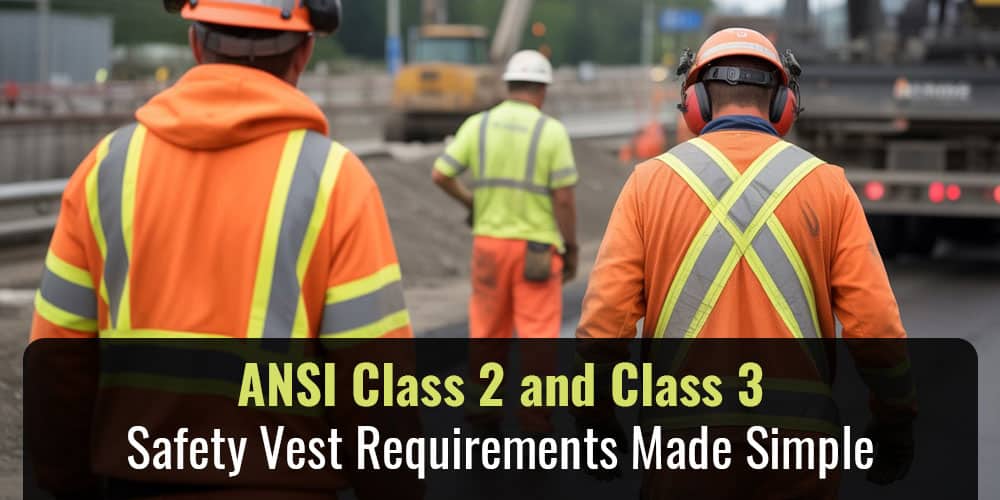
High-visibility safety apparel plays a direct role in reducing struck-by hazards in construction, roadway, and transportation environments. ANSI Class 2 safety vest requirements and Class 3 standards exist to ensure workers are seen from longer distances, at higher speeds, and in visually complex surroundings. With roadway incidents remaining a leading cause of worker fatalities, understanding when and why to wear the correct ANSI class is not optional. This guide breaks down ANSI ISEA 107 requirements in plain language, explains where Class 2 and Class 3 vests apply, and helps employers and workers choose compliant, job-appropriate HVSA that improves driver detection study outcomes and overall pedestrian conspicuity.
Overview of ANSI/ISEA 107-2020
ANSI/ISEA 107 is the American National Standard that governs high-visibility safety apparel used to signal the presence of workers visually. Its purpose is to reduce the risk of struck-by hazards by specifying minimum amounts of fluorescent background material, retroreflective tape, garment design, and vest labeling requirements.
The most recent ANSI/ISEA updates refined terminology and clarified performance expectations rather than radically changing visibility thresholds. A key change was aligning language around performance levels to clearly separate garment coverage (Class 1, Class 2, or Class 3) from reflective material quality, now referred to as Performance Class 2. The standard also reinforced safety garment types, including Type R vest designs for roadway environments and Type P vest designs for public safety and emergency response.
These updates matter because transportation, material moving, and construction together account for nearly half of fatal workplace injuries. PPE standards, such as ANSI/ISEA 107, exist to ensure workers remain visible in roadway work zones, where poor lighting, high vehicle speeds, and background clutter create significant risks.
What Is ANSI Class 2?
ANSI Class 2 represents an intermediate level of visibility protection, designed for workers exposed to moderate to high traffic speeds or complex environments. It provides more coverage than Class 1 but does not require full arm coverage like Class 3 garments.
Class 2 garments include significantly more fluorescent background material and retroreflective tape, improving visibility distance, low-light visibility, and recognition under vehicle headlights. Most designs feature sleeveless or short-sleeve vests that strike a balance between visibility and mobility, making them suitable for use as a surveyor vest or utility work vest.
Workers exposed to vehicle speeds exceeding 25 miles per hour, changing backgrounds, or inclement weather gear conditions benefit most from Class 2 apparel. These garments are commonly required in construction zones, utility corridors, and airport environments where reaction time is critical.
ANSI Class 2 Vest Requirements
To meet ANSI Class 2 safety vest requirements, a garment must adhere to precise rules governing material quantities, reflective performance, and design layout. These requirements are engineered to deliver 360-degree visibility and clear human recognition in traffic environments.
Minimum Background Material
An ANSI Class 2 vest must include at least 775 sq in of approved fluorescent background material. Acceptable colors include fluorescent yellow-green, fluorescent orange-red, and fluorescent red. This material creates high contrast against urban and natural backgrounds, improving daytime and transitional visibility.
The background material requirements ensure the wearer remains visible from multiple angles and distances. Smaller garments, such as Class 1 vests, do not provide enough surface area to achieve equivalent visibility.
Minimum Retroreflective Material
Class 2 vests must include a minimum of 201 sq in of retroreflective tape. The reflective trim must have a strip width of at least 1.375 inches. When split trim is used, each strip may be reduced to 1 inch while maintaining equivalent retroreflective performance.
Retroreflective material is essential for nighttime safety. It reflects light directly back toward its source, allowing drivers to recognize a human form rather than a single point of light, which significantly improves pedestrian conspicuity.
Reflective Tape Placement
Proper reflective stripe placement is critical. ANSI Class 2 garments must provide complete 360-degree visibility, typically achieved through horizontal torso bands and vertical or diagonal shoulder stripes.
Shoulder striping helps define body orientation and movement, while side coverage ensures visibility when the wearer turns or is partially obstructed. This layout directly supports work zone safety and faster driver recognition.
Garment Types- Type R vs Type P
ANSI 107 identifies specific types of safety garments based on the environment. A Type R vest is designed for use on roadways and offers improved visibility in traffic settings. These are the most common Class 2 vests used by construction workers, surveyors, and utility crews.
A Type P vest, also known as a public safety vest or emergency responder vest, is specifically designed for use by law enforcement, firefighters, and EMS personnel. While still meeting Class 2 visibility thresholds, Type P garments may feature different color blocking or be compatible with duty equipment.
When to Wear a Class 2 Vest
Choosing when to upgrade to Class 2 protection depends on exposure risk, rather than job title alone. Speed, distance, lighting, and environmental complexity all determine when higher visibility becomes necessary.
Typical Job Roles and Scenarios
Class 2 vests are commonly worn by road construction workers, utility crews, surveyors, crossing guards, and airport ground staff. These roles involve frequent interaction with vehicles, heavy equipment, or aircraft in visually demanding environments.
Survey crews working along highways often remain stationary for extended periods near fast-moving traffic, making a Class 2 surveyor vest essential. Airport ground crews rely on Class 2 apparel to remain visible amid service vehicles, aircraft, and shifting light conditions.
Environmental and Traffic Conditions
Class 2 apparel is recommended when traffic speeds exceed 25 miles per hour, when backgrounds are visually complex, or when work is conducted during dawn, dusk, or poor weather conditions. Rain, fog, shadows, and glare significantly reduce contrast, increasing the need for high-performance visibility.
These factors are directly tied to struck-by hazards in the construction industry. Improved conspicuity through Class 2 garments shortens driver reaction time and enhances recognition in low-light visibility scenarios.
Comparison of Vest Classes
Class 1 vs Class 2 vs Class 3
| Feature | Class 1 | Class 2 | Class 3 |
| Minimum Background Material | ~217 sq in | 775 sq in | 1,240 sq in |
| Minimum Reflective Material | ~155 sq in | 201 sq in | 310 sq in |
| Typical Garment Design | Harness or minimal vest | Sleeveless or short-sleeve vest | Long-sleeve vest or jacket |
| Traffic Speed Exposure | Low-speed areas | Over 25 mph | Over 50 mph |
| Use Cases | Parking areas, warehouses | Utilities, road crews, airports | High-speed highways, night work |
Class 3 garments provide maximum visibility, including arm coverage that improves motion recognition. They are required for high-speed roadways and nighttime operations.
OSHA and Legal Requirements
Before diving into individual regulations, it is essential to know how OSHA rules, federal roadway standards, and employer duties intersect to define work zone safety expectations.
OSHA Standards (29 CFR 1926.201)
OSHA 1926.201 requires high-visibility warning garments when construction workers are exposed to public traffic. While OSHA does not list ANSI classes directly, compliance with ANSI ISEA 107 is widely accepted as meeting this requirement.
MUTCD Requirements for Roadway Work Zones
The MUTCD requires that workers in roadway work zones wear high-visibility apparel that meets ANSI Class 2 or Class 3 standards. This effectively makes ANSI compliance mandatory for most roadway operations.
General Duty Clause and Employer Responsibilities
Under OSHA’s general duty clause, employers must protect workers from recognized hazards. Given the documented risk of struck-by incidents, failing to provide compliant high-visibility safety apparel may constitute a violation of safety regulations.
Materials and Quality Standards
ANSI Class 2 vests utilize fluorescent fabrics specifically designed for enhanced visibility under both daylight and ultraviolet light. Reflective materials are rated by brightness and durability, ensuring consistent retroreflective performance over time.
Standards also address colorfastness, requiring fabrics to resist fading after laundering and exposure to sunlight. Specialty garments may include AR/ARC rating icons when flame or arc protection is needed.
Vest Labeling and Compliance Markings
Vest labeling plays a crucial role in ensuring that a high-visibility safety vest meets the required safety and regulatory standards. Every compliant vest must include a clearly visible and permanently attached compliance marking label that identifies the ANSI/ISEA 107 standard under which the garment is certified. This label serves as immediate proof that the vest has been designed and tested in accordance with recognized PPE standards for high-visibility safety apparel.
The label must also specify the performance class, such as Class 2 or Class 3, which indicates the amount of background and reflective material used on the garment. Additionallyn, the garment type must be specified, typically as Type R for roadway environments or Type P for public safety applications. This distinction is important because it confirms whether the vest is appropriate for use in roadway work zones or for emergency response operations.
Care instructions are another required labeling element. These instructions outline the proper washing, drying, and handling methods necessary to preserve the retroreflective performance, colorfastness, and overall durability of the garment. Ignoring care guidance can cause reflective tape to degrade or fluorescent fabric to fade, potentially rendering the vest non-compliant with safety standards.
Some labels may also include icons or markings for specialized features, such as flame resistance or AR/ARC rating, when applicable. For safety managers and inspectors, readable and intact vest labels make it easy to verify compliance during audits, enforce uniform safety practices, and ensure workers are wearing appropriate, certified visibility protection on the job site.
Choosing the Right Vest
Selecting the right high-visibility safety vest involves more than just choosing the correct ANSI class. The vest must also match the work environment, surrounding conditions, and job-specific needs to provide consistent and reliable visibility.
Color Selection Guidelines
Color selection plays a significant role in how easily a worker is detected. Fluorescent yellow-green is commonly used in urban and suburban settings because it provides strong contrast against concrete, buildings, and shaded environments. This color performs well in both daylight and low-light conditions, particularly when backgrounds are visually complex. Fluorescent orange-red is typically used in roadway and highway environments, especially where traffic control devices, cones, and barrels are already orange in color. Using a contrasting yet familiar color improves recognition and reinforces work zone awareness for drivers.
When choosing a vest color, the goal is to achieve maximum contrast with the surrounding environment, rather than personal preference. The wrong color choice can reduce visibility, particularly in changing light or weather conditions.
Optional Features- pockets, break-away tabs, mic tabs, D-rings, flame-resistance
Optional vest features can improve comfort, efficiency, and safety without affecting compliance. Pockets allow workers to carry small tools or devices without obstructing reflective areas. Break-away tabs reduce the risk of entanglement by allowing the vest to release if caught on equipment. Mic tabs support hands-free communication, while D-rings provide attachment points for ID badges or tools. For utility, electrical, and energy sector work, flame-resistant vests add an extra layer of protection when exposure to heat or arc hazards is possible.
Maintenance and Care
Proper vest maintenance is crucial for maintaining compliance and ensuring safety performance. Dirt, oil, and jobsite residue reduce reflectivity and visibility over time. Washing should follow the manufacturer’s instructions, using a mild detergent and avoiding bleach and fabric softeners. Air drying or low-heat drying prevents reflective cracking.
Routine inspections should identify cracked tape, faded fabric, missing trim, or labels that are unreadable. Replacement becomes necessary when visibility is compromised.
Key signs requiring replacement include-
- Retroreflective material no longer reflects light.
- Dull or faded background fabric
- Torn material or missing reflective sections
- Labels that cannot be read
High-use garments may require replacement every six to twelve months. Proper vest care supports compliance, reduces risk, and reinforces a strong safety culture.
Frequently Asked Questions
1.What are the requirements for an ANSI Class 2 vest?
An ANSI Class 2 vest must include 775 sq in of fluorescent background material and 201 sq in of retroreflective tape, with specific width and reflective stripe placement to ensure 360-degree visibility.
2. What is ANSI Class 2?
Performance Class 2 provides intermediate visibility protection for workers exposed to traffic over 25 mph or complex visual environments.
3. When should you wear a Class 2 garment?
Class 2 garments should be worn in roadway work zones, utility operations, and low-light or high-speed environments.
4. What is a Class 2 Level 2 safety vest?
Class 2 refers to material coverage, while Level 2 describes reflective brightness. Modern vests typically meet Performance Class 2 standards.
5. What are the OSHA rules for vests?
OSHA enforces visibility requirements through OSHA 1926.201, the MUTCD, and the general duty clause to reduce the risk of being struck.
References and Further Reading
Industry data consistently shows that struck-by incidents remain a primary cause of fatal injuries in construction and transportation. These trends reinforce the importance of ANSI-compliant apparel in improving detection, reaction time, and overall safety outcomes.
Final Thoughts and CTA
Choosing the correct ANSI Class 2 or Class 3 vest is not just about compliance; it’s also about safety. It directly affects recognition, reaction time, and survival in high-risk environments, with roadway and construction fatalities still representing a significant share of workplace deaths-visibility matters.
For reliable, ANSI-compliant high-visibility safety apparel designed for demanding job sites, check out the full selection from National Safety Gear. Their range makes it easier to select the right class, features, and durability for your environment while staying protected and compliant.