
Picture this: it’s 5:30 AM, your crew is already on site, and trucks are reversing, machinery is moving, visibility is low, and everyone is technically “wearing hi-vis clothing.” But here’s the uncomfortable truth: a jacket caked in grime, oil, and UV-faded dye may satisfy the dress code while completely failing to meet the safety standard.
That vest has been through a dozen hot washes with the wrong detergent, fluorescent dyes faded, and reflective tape starting to peel. It still looks like a high-visibility vest, but it no longer performs like one.
Below, we give you a complete, step-by-step method for cleaning hi-vis clothing the right way, preserving reflective strips, protecting fluorescent fabric, and keeping your gear fully compliant with EN ISO 20471 and ANSI/ISEA 107 standards, wash after wash after wash.
Key Highlights
- Dirty or faded gear can reduce detection distance by up to 50%
- Hot water and fabric softener can permanently destroy reflectivity
- Most garments lose certified performance after 25–30 washes
- Improper laundering is one of the fastest ways to void compliance
- Correct high-visibility jacket care significantly extends lifespan
This Isn’t Just Laundry: Here’s Why Proper Hi-Vis Care Is a Safety Issue
The U.S. Bureau of Labor recorded 123,160 nonfatal “contact with object or equipment” injuries in private construction in 2020. According to the CDC’s NIOSH division, struck-by incidents remain a leading cause of construction fatalities and compromised visibility is a contributing factor. Dirty or faded gear can cut detection distance by up to 50%, while properly maintained high-visibility safety apparel can make workers visible from up to 1,280 ft, according to OSHA.
Standards exist to prevent this risk. EN ISO 20471 compliance (international) and ANSI ISEA 107 laundry requirements (U.S.) define minimum brightness and reflectivity thresholds. When contamination or improper cleaning of hi-vis clothing drops performance below those limits, the garment is no longer compliant PPE.
The market reflects the importance: the global hi-vis apparel sector is valued at $1.81B in 2024 and projected to reach $2.70B by 2030, driven by stricter safety regulations. Most garments are engineered for roughly 25–30 wash cycles, making every wash a factor in long-term safety.
Don’t Skip This: Pre-Wash Preparation That Actually Protects Your Gear
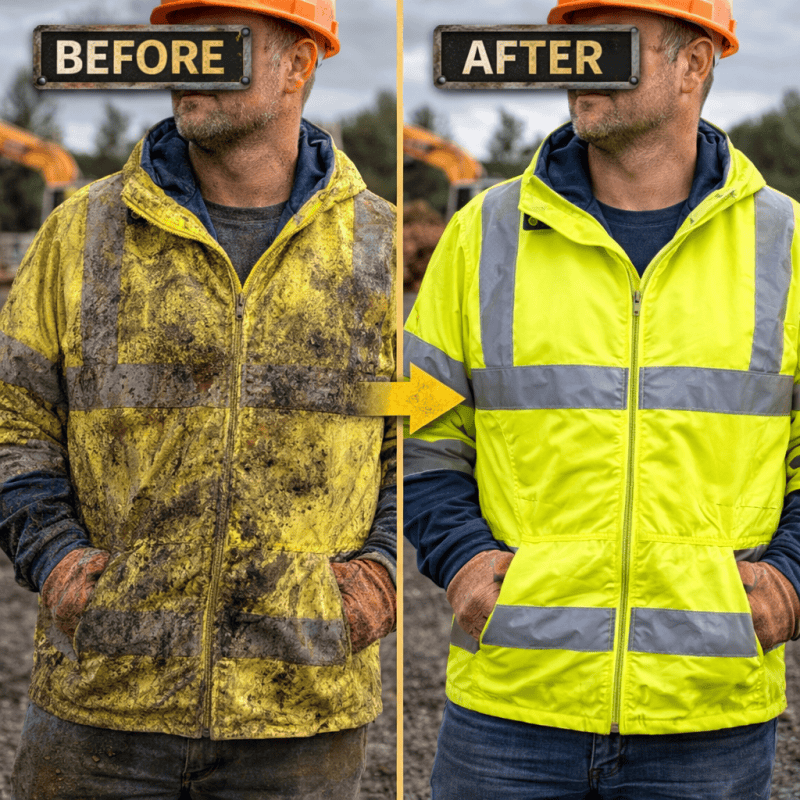
Most long-term damage to hi-vis apparel happens before the wash cycle starts. A few minutes of preparation dramatically improve the cleaning of hi-vis clothing and preserve EN ISO 20471 compliance.
Pre-wash checklist:
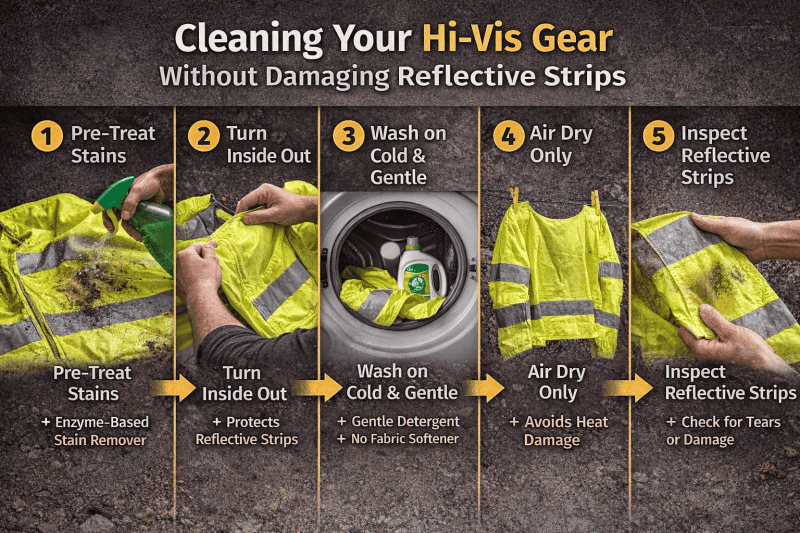
- Read the care label: Follow temperature and handling limits (often ≤ 30 °C) to maintain EN ISO 20471 performance.
- Inspect for damage: Check reflective tape, fluorescent panels, and seams; washing damaged gear accelerates failure.
- Close all fasteners: Zip, button, and secure Velcro to reduce snagging and abrasion.
- Turn inside out: Protects the outer fluorescent fabric and reflective strips from friction.
- Wash separately: Avoid denim, canvas, or heavy workwear that can cause abrasion.
- Pre-treat stains: Treat grease, paint, and heavy soil before washing to prevent permanent setting.
Step-by-Step: How to Wash Hi-Vis Clothing Without Wrecking It
Once your garment is prepped, the wash itself is straightforward as long as you follow the right settings. Here’s what each variable means for your gear.
1. Choose the Right Detergent: It’s More Important Than You Think
Detergent choice is a major and often ignored factor in cleaning hi-vis clothing. Many standard products contain Optical Brightening Agents (OBAs), which make fabrics appear brighter while gradually degrading fluorescent dyes. A garment may look clean but fall below EN ISO 20471 compliance luminance requirements.
Best practice:
- Use a mild, OBA-free detergent
- Prefer liquid over powder (powder residue can reduce retroreflective strip care performance)
- Choose enzyme-based formulas safe for technical fabrics to remove sweat and organic stains
| Detergent Type | OBA-Free? | pH Level | Hi-Vis Safe? | Notes |
| Mild liquid (e.g., Woolite, Nikwax) | Yes | Neutral | ✅ Best choice | Gentle on fluorescent dyes & retroreflective tape |
| Standard laundry powder | Often No | Alkaline | ⚠️ Use with caution | OBAs temporarily boost brightness, then degrade fluorescence |
| Biological enzyme cleaner | Varies | Neutral–Acidic | ✅ Good for stains | Check label; enzyme action is safe on most hi-vis fabrics |
| Bleach-based cleaner | No | High Alkaline | ❌ Never use | Permanently destroys fluorescent dyes; delaminates tape adhesive |
| Fabric softener/conditioner | N/A | Varies | ❌ Never use | Coats retroreflective glass beads, slashing nighttime reflectivity |
| Detergent with OBAs | No | Varies | ❌ Avoid | Causes false brightness that masks underlying fluorescence loss |
2. Use Cold Water: Fluorescent Dyes Start Fading at 40°C
Temperature is a primary cause of premature failure in cleaning hi vis clothing. Fluorescent dyes begin to degrade above 40 °C, while higher temperatures soften the adhesive that bonds reflective tape, leading to lifting and delamination, often permanently.
Best practice:
- Default to 30 °C (cold wash safety gear)
- Only use 40 °C if the care label explicitly allows it
- Never exceed label limits
- Select a delicate/synthetic cycle to reduce agitation and spin stress on the retroreflective strip care
| Cycle | Temperature | Spin Speed | Best For | Reflective Tape Impact |
| Delicate / Gentle | Cold (30°C / 86°F) | Low | All hi-vis vests & jackets | ✅ Safest – minimal mechanical stress |
| Synthetics | Cold–Warm (30–40°C) | Medium | Polyester hi-vis workwear | ✅ Safe if strictly under 40°C |
| Normal / Cotton | Warm–Hot (40–60°C) | High | Heavy cotton workwear only | ⚠️ Risk of tape delamination at 50°C+ |
| Hot Wash | Hot (60°C+) | High | Not suitable for hi-vis | ❌ Destroys fluorescence & tape adhesion |
3. Load Size Matters More Than You’d Expect
Overloading prevents proper tumbling and creates friction, the primary cause of wear during cleaning hi vis clothing. Instead of moving freely, garments rub against each other, accelerating damage to fluorescent fabric care surfaces and retroreflective strip care elements.
Best practice:
- Wash in small, light loads
- Split large batches across multiple cycles
- Pair only with lightweight, smooth fabrics
- Avoid heavy or abrasive items
When in doubt, wash hi-vis garments alone
How to Remove Every Common Hi-Vis Workwear Stain
Use this reference table to match your stain type to the correct pretreatment, then wash as directed.
| Stain Type | Pretreatment Method | Step-by-Step Action | Washing Instruction |
| Grease & Oil | Degreasing dish soap (e.g., Dawn) | Apply dish soap directly; gently work in with fingers or soft brush; leave 15–20 min; rinse cold | Gentle cycle, 30°C, OBA-free detergent |
| Collar Ring / Sweat | Baking soda paste or enzyme pre-treater | Mix baking soda + water into paste; apply; leave 20–30 min; OR apply enzyme cleaner 30 min; rinse | Gentle cycle, 30°C, OBA-free detergent |
| Mud / Dirt | Allow to dry fully; then dry-brush | Never scrub wet mud; dry completely; brush off bulk with a soft cloth; pre-treat residue with enzyme cleaner | Gentle cycle, 30°C, OBA-free detergent |
| Tar | Manufacturer-approved solvent | Test solvent on a hidden area first; apply carefully; blot, don’t rub; ventilate area; do not use on tape | Gentle cycle, 30°C post-solvent |
| Paint (wet) | Rinse immediately with cold water | Flush under cold running water quickly; blot with a clean cloth; apply a mild enzyme pre-treater | Gentle cycle, 30°C, OBA-free detergent |
| Paint (dried) | Specialist textile paint remover | Test on hidden area; apply remover; leave per instructions; blot carefully; never apply acetone to reflective tape | Gentle cycle, 30°C post-treatment |
| Oil-based chemical | Manufacturer-approved degreaser | Blot excess with a cloth; apply degreaser to the fabric panel only (not tape); rinse thoroughly with cold water | Gentle cycle, 30–40°C |
One non-negotiable rule: never apply any solvent, including acetone, nail polish remover, or petroleum-based degreaser, directly to retroreflective tape. These solvents dissolve the glass bead coating that creates retroreflection, and the damage is permanent.
The Drying Stage Is Where Most People Accidentally Ruin Their Hi-Vis Gear
Even after proper cleaning, hi vis clothing, and incorrect drying can quickly undo the benefits. Heat and UV exposure degrade fluorescent dyes and weaken reflective tape adhesion, directly impacting fluorescent fabric care and retroreflective strip care.
i. Air Drying — Best Practice
Air drying eliminates heat damage.
Recommended method:
- Hang immediately on a wide hanger
- Use a cool, dry, well-ventilated indoor space
- Avoid heat sources
This preserves brightness, prevents tape delamination, and maximises compliant lifespan.
ii. Low-Heat Tumble Drying — Only If Necessary
If machine drying cannot be avoided:
- Use the lowest heat setting (≤ 40 °C)
- Choose Delicate/Air cycles
- Remove while slightly damp
- Finish drying on a hanger
High heat is a leading cause of reflective tape failure and shrinkage.
iii. Avoid Direct Sunlight
Prolonged UV exposure causes gradual dye fading, even without heat.
Safer options:
- Dry in shade
- Dry indoors with airflow
- Avoid prolonged sun exposure
Repeated sun-drying can reduce brightness below EN ISO 20471 compliance levels before the garment reaches its rated wash lifecycle.
Common Mistakes & How to Avoid Them
These are the most common care errors that compromise hi-vis safety gear before its time, often without any visible warning signs until the damage is already done.
| Common Mistake | What It Does to Your Hi-Vis | What to Do Instead |
| Using bleach | Permanently destroys fluorescent dyes; weakens tape bonding | Use OBA-free mild liquid detergent only |
| Adding fabric softener | Coats’ retroreflective glass beads reduce nighttime visibility significantly | Never add fabric softener. Period. |
| Washing in hot water (50°C+) | Fluorescent dyes fade; tape adhesive softens and lifts; tape delamination begins | Use cold water – 30°C maximum |
| Overloading the machine | Garments bunch and abrade each other; reflective strips get scratched | Wash in small, light loads only |
| Skipping stain pretreatment | Grease and paint set permanently under machine washing heat | Always pre-treat stains before washing |
| Using OBA detergents | Creates false brightness that hides real fluorescence degradation | Choose OBA-free, pH-neutral detergents |
| Drying in direct sunlight | UV radiation fades fluorescent dyes rapidly, even after one drying session | Dry in shade or indoors with airflow |
| Tumble drying on high heat | Tape delamination, shrinkage of base fabric, and dye fading | Tumble dry on the lowest setting or air dry |
Beyond the Wash: Maintenance Habits That Keep Hi-Vis Gear Compliant for Longer
Great hi-vis clothing care doesn’t start and end at the washing machine. What you do between, how you store, inspect, and rotate your gear has an equally significant impact on its service life and EN ISO 20471 compliance status.
1. Rotate Your Gear
Using two sets reduces wear on each garment and ensures a clean backup. Since most hi-vis items are rated for about 25–30 washes, rotation significantly extends usable life.
2. Inspect Weekly
Routine checks help preserve retroreflective strip care and visibility.
Look for:
- Reflective tape cracking, peeling, or lifting
- Faded or greyed fluorescent fabric care panels
- Tears, fraying, or holes reduce coverage
- Persistent stains that dull brightness
Even minor tape delamination can sharply reduce reflectivity.
3. Store It Properly
Improper storage degrades gear even when unused.
Best practices:
- Hang on wide hangers (do not fold)
- Keep in a cool, dry space
- Avoid sunlight, heat, and chemicals
Folding creates crease points where reflective tape can crack over time.
4. Track Wash Cycles
Hi-vis garments degrade gradually, not suddenly.
Simple tracking guidelines:
- ~20 washes: Plan replacement
- ~25 washes: Increase inspections
- ~30 washes: Retire the garment
Fluorescent fading may be invisible but still fall below safety thresholds, making wash tracking one of the most reliable workwear cleaning tips for compliance.
How Do You Actually Know When Hi-Vis Clothing Needs to Be Replaced?
Even with proper high visibility jacket care and careful cleaning, hi-vis clothing safety apparel does not remain compliant forever. Fluorescent dyes fade, coatings wear down, and reflective performance declines with use.
Replace the garment if you notice any of the following:
- Damaged reflective tape: Cracking, peeling, or lifting edges indicate failure of retroreflective strip care. Delamination worsens quickly and reduces nighttime visibility.
- Faded fluorescent fabric: If the background looks dull, grey, or olive instead of bright yellow/orange, it may no longer meet EN ISO 20471 compliance luminance requirements. Compare with a new item if unsure.
- Excessive wash cycles: Most hi-vis garments are rated for about 25-30 washes. Proactive replacement is safer than waiting for failure.
- Permanent staining: Stubborn contamination reduces the effective fluorescent area, undermining fluorescent fabric care performance.
- Physical damage: Tears, holes, or seam failures compromise both visibility coverage and structural integrity under ANSI ISEA 107 laundry and ISO standards.
Pro Tips: 6 Things That Extend Your Hi-Vis Gear’s Compliant Life
|
FAQs
How do you clean high-visibility clothing?
Turn inside out, pre-treat stains, and machine wash on a gentle cycle at ≤ 30 °C using a mild OBA-free detergent. Do not use bleach or fabric softener. Air dry in shade or tumble dry low only if necessary to preserve fluorescent fabric care and retroreflective strip care.
Can you put hi-vis clothing in a washing machine?
Yes. Use a delicate/synthetics cycle, cold water, low spin, small loads, and keep fasteners closed. Separate from heavy or abrasive items to avoid damage when washing hi-vis vest garments.
Can reflective material be washed?
Yes. Reflective tape is designed for laundering. Use cold water, a gentle cycle, and mild detergent. Avoid bleach, softener, high heat, and solvents to maintain retroreflective strip care performance.
How do you wash clothes with graphics on them?
Turn inside out, wash cold on a gentle cycle with mild detergent, and avoid heat above 40 °C. High temperatures cause cracking, peeling, and print delamination.
How do I get rid of a ring around the collar on hi-vis gear?
Pre-treat with baking soda paste or degreasing dish soap, let sit 15–30 minutes, rinse, then wash using standard cleaning hi vis clothing guidelines (cold water, gentle cycle).
How often should hi-vis clothing be washed?
Wash whenever visibly soiled. Heavy-duty roles may require weekly cleaning; lighter use can be less frequent. Monitor the typical 25–30 wash lifespan and perform regular inspections to maintain EN ISO 20471 compliance.
Your Hi-Vis Gear Works Hard. Make Sure You’re Taking Care of It.
High-visibility clothing is not a commodity; it’s certified personal protective equipment with a measurable, finite service life. Every hot wash, every wrong detergent, every dryer cycle on the wrong setting chips away at the fluorescent dye integrity and retroreflective tape adhesion that keep workers visible and alive.
The good news: none of this is complicated.
- Cold water
- Gentle cycle.
- OBA-free detergent.
- Air dry inshade.
- Inspect weekly.
That’s the formula. Follow it consistently, track your wash cycles, and replace garments proactively when they approach their service life and your hi-vis clothing will perform exactly as EN ISO 20471 and ANSI/ISEA 107 require, every shift, every site, every time.
At National Safety Gear, we stock a full range of certified high-visibility clothing from Class 2 vests to Class 3 full jackets built to the highest standards and designed to be cared for exactly as this guide describes. Because the best hi-vis gear is only as good as the person maintaining it.
Resources & References
All statistics and compliance information in this guide are sourced from authoritative organisations:
- U.S. Bureau of Labor Statistics – Nonfatal Occupational Injuries and Illnesses (2020)
- CDC NIOSH – Struck-by Incidents in Construction
- OSHA – High-Visibility Safety Apparel Fact Sheet
- ISO – EN ISO 20471 Standard for High-Visibility Clothing
- ANSI/ISEA 107 Standard Overview
- Grand View Research – High Visibility Clothing Market Report