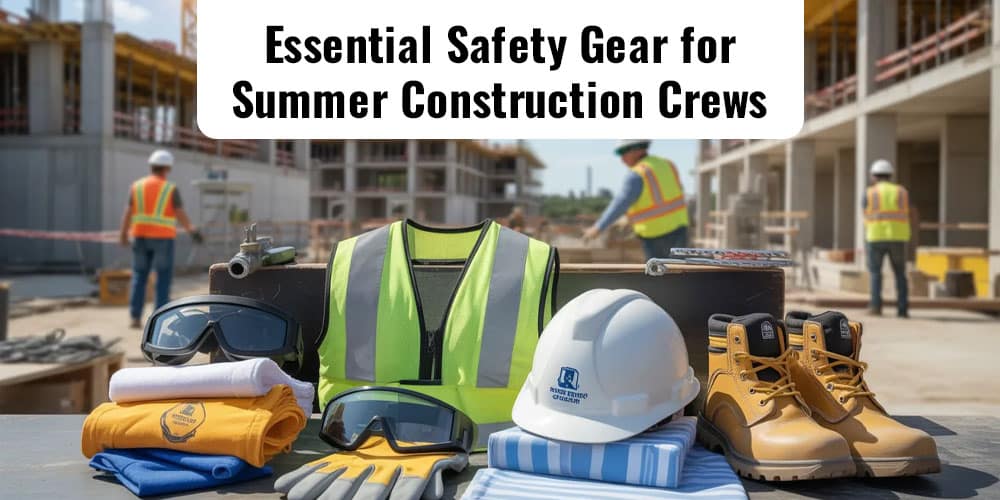
Summer shifts can turn a normal jobsite into a stricter test of focus and stamina. Heat speeds up fatigue, sweat reduces grip, glare makes it harder to read signals, and dry conditions can push dust into work zones for hours. In that environment, safety gear for construction must protect against real hazards while remaining wearable throughout long shifts. This guide covers core construction PPE, newer innovative PPE, and warm-weather add-ons that help crews stay cooler and see clearly. You will also acquire practical habits for PPE inspection and maintenance, ensuring your gear functions properly when it matters most, every day.
Why Safety Gear Matters in Construction
Construction combines overhead work, moving equipment, sharp materials, loud tools, power sources, and time pressure in one place. That is why personal protective equipment is not a formality.
- It reduces injury severity when something goes wrong and, just as important, it helps workers move with more confidence and control.
- The risk level is not theoretical. One in five U.S. worker deaths occurs in construction, with 1,069 fatalities in 2022. Hot weather can raise the chance of a lapse because people get tired sooner and “quick shortcuts” feel easier to justify.
- OSHA’s “Fatal Four” categories reveal where prevention yields the most significant benefits. Falls, struck-by incidents, electrocution, and caught-in or between events account for 57.7% of construction deaths.
- Those causes directly map to everyday choices regarding head protection, visibility, traffic control, and working at height. When equipment is comfortable and well-fitted, crews wear it.
- When it is uncomfortable, scratched, or worn out, workers adjust it or remove it. That is why a strong safety culture is inseparable from the selection, training, and daily habits of PPE.
OSHA Requirements and Standards for PPE
Construction PPE rules are anchored in OSHA 29 CFR 1926. In practical terms, employers must identify hazards, provide workers with appropriate personal protective equipment, train them on its correct use and limitations, and enforce consistent wear. Workers must use the gear properly and report damage, poor fit, or missing items.
Absolute compliance is not only about having PPE on site. It is about choosing the right gear for the task, ensuring it fits, and keeping it in usable condition. Standards also guide what you buy. High-visibility apparel is labeled by class, including ANSI Class II, which is commonly used when workers are exposed to traffic or equipment movement and need higher conspicuity. Eye and face protection should match the risk of flying debris, dust, and splashes. Respiratory gear must match the hazard and be stored and maintained to ensure it still seals and filters properly.
Supervisors should also document training and verify that PPE is used as intended. This includes ensuring replacements are available, correcting improper wear promptly, and updating selections when site conditions change. When PPE programs are treated as a living system rather than a one-time purchase, crews are more likely to buy in and wear their gear consistently.
Top 10 Essential PPE for Construction Workers
Head Protection- Hard Hats
Hard hats protect against falling objects and head impacts in tight work areas. Select the appropriate type and class for job hazards, including electrical exposure where applicable. Fit is a safety feature. A helmet should sit level, feel stable when you look up or bend, and stay secure with the suspension adjusted correctly. Store helmets out of direct sunlight, keep sweatbands clean, and replace headgear after a significant impact or when the shell or suspension shows signs of wear.
Eye and Face Protection
Most job sites need eye protection by default. Safety glasses are suitable for everyday tasks such as drilling, cutting, fastening, and navigating through active zones. When dust is heavy, or particles can slip around side shields, safety goggles provide a tighter seal. For grinding, cutting, and specific splash hazards, a face shield provides broader coverage, and it is most protective when paired with safety glasses underneath. Summer glare and fogging make lens care essential, and an emergency eyewash option should be readily accessible wherever dust, concrete, or chemicals are present.
Hearing Protection
Hearing damage builds up quietly. Hearing protection should match the task and the frequency of movement between zones. Earplugs are low profile under other gear. Earmuffs are quick to put on and remove, and can be helpful for intermittent noise. In the summer, heat can make earmuffs uncomfortable, so choose models with a good seal and tolerable pressure. Additionally, train crews on the correct insertion of plugs to ensure adequate protection.
Respiratory Protection
Dry weather can increase airborne dust and make exposure feel “normal.” Cutting, drilling, grinding, demolition, and cleanup can all require the use of respirators, depending on the material and task. For concrete and masonry work, controls and procedures for silica dust protection may be necessary, even when using wet methods and vacuuming. Summer storage matters because seals deform and filters clog when respirators are tossed into dirty boxes. Keep respirators clean, protected, and easily accessible so workers do not skip them when pace and heat rise simultaneously.
Hand Protection
Hands face sharp edges, abrasion, pinch points, wet cement, and chemicals. Safety gloves should match the work, not the purchasing default. Leather helps with abrasion and rough handling. Cut-resistant gloves are a better choice around sharp sheet goods, metal edges, and tasks adjacent to blades, as they reduce laceration risk without compromising grip. For chemical contact, select glove materials that are compatible with the substance and pair them with the appropriate clothing protection when a splash risk exists.
Foot Protection
Foot hazards include drops, rolling loads, punctures, and slips. Supportive safety boots protect against impact and compression while stabilizing movement on uneven ground. Many crews prefer composite toe boots in hot weather because they are often lighter in weight. Summer also changes traction because fine dust can reduce grip on hard surfaces. Inspect the tread, replace worn soles, and keep boots dry to ensure workers maintain a steady footing.
High-Visibility Clothing
Visibility reduces close calls around trucks, lift zones, and equipment corridors. High-visibility vests and high-vis shirts help operators spot workers more easily and judge distances more accurately. In many active zones, ANSI Class II apparel is a common baseline. Summer tolerance matters, so choose high-visibility pieces in breathable fabric that workers can wear through peak heat without having to remove them.
Fall Protection
Working at height demands real fall protection planning, not improvisation. The system includes a properly fitted harness, a compatible lanyard, and a verified anchor point that can handle expected loads. It also provides clearance planning, swing-fall reduction, and rescue steps. Daily checks are essential because webbing and hardware degrade with sun, sweat, and grit, and any shock-loaded component must be removed from service.
Protective Clothing
Protective apparel can prevent abrasion, contamination, burns, and chemical contact. Coveralls help keep clothing from snagging and protect skin during dirty work. Some tasks require specialized layers, including a chemical-resistant suit for splash risk. For sun exposure, UV-protective clothing reduces burns while remaining lighter than many heavy layers. Match protection to the hazard and rotate tasks when heavy gear is required for extended periods.
Knee Pads
Repeated kneeling on concrete and decking can cause joint damage over time. Knee pads reduce pressure and help workers maintain a safer posture during floor-level tasks. Fit and cleanliness matter in summer because sweat can cause slipping and irritation. When knee protection stays in place and feels stable, workers wear it consistently, reducing long-term wear on the body.
Beyond Basic PPE
Emerging technology is meant to reduce blind spots, not replace training. The best innovative PPE options keep programs simple, focus on meaningful alerts, and reinforce safe decisions that have already been taught on-site.
Smart Hard Hats
A bright hard hat can add impact sensing, motion tracking, and alerting features that help supervisors respond when a worker may be injured or disoriented. Some systems add location tools for large sites. Innovative features only help when the helmet fits well, is worn consistently, and is charged and stored correctly.
Connected Safety Vests
A connected vest can provide proximity alerts around moving equipment and blind corners. In high-traffic zones, it can support forklift safety by warning operators and pedestrians when distances close too quickly. Alerts should be tuned to the site so they stay useful and do not become constant noise.
Biometric Sensors
Heat and fatigue develop quietly. Wearables that monitor biometric sensors, such as heart rate and temperature trends, can support early intervention by recommending water, rest, shade, or task rotation. Used effectively, they enhance heat stress prevention, especially for new hires or crews working extended periods in direct sunlight.
Seasonal Considerations
Summer-specific planning is about keeping PPE wearable and practical. Start with airflow and sweat management. Base layers and high-visibility shirts made from breathable fabric reduce overheating and help prevent eye protection fogging. For extreme heat, a cooling vest can help reduce the heat load during peak hours, especially when workers must wear heavy harnesses or thick protective layers. Sun exposure also requires a plan, and UV-protective clothing helps reduce burns and fatigue during long shifts.
Hydration should be built into the workflow. A hydration pack makes it easier to sip water consistently when workers are away from coolers, moving between tasks, or working at height. Pair hydration with planned shade breaks and clear escalation steps when a worker exhibits signs of heat illness. A simple rotation plan that shifts the most demanding tasks away from the hottest window can also reduce mistakes and keep the crew steadier. Finally, dry conditions can increase airborne dust, so reinforce the correct use of respirators when tasks generate heavy particulate exposure.
How to Choose and Maintain Your Construction Safety Gear
Key Selection Factors
Strong choices are guided by three filters- durability, comfort, and compliance. If anyone fails to wear the gear consistently, it will not protect as expected. Fit is part of safety. Boots that pinch distract workers. Gloves that slide reduce grip. Harnesses that rub get loosened. Selection should also reflect job roles, as different tasks require varying levels of dexterity, coverage, and heat tolerance.
Inspection and Maintenance
Daily PPE inspection should be quick and specific. Check helmets for cracks and suspension wear. Check lenses and frames for damage that reduces visibility. Confirm that earplugs are clean and stored correctly, and that the earmuff cushions still seal. For harnesses, inspect webbing, stitching, and hardware, and confirm labels and service life information are readable.
Then follow through with PPE maintenance to keep the gear usable, clean eyewear with proper wipes. Wash high-vis garments as directed so reflective areas remain effective. Dry your boots thoroughly and replace worn soles before traction becomes a risk. Store respirators in clean containers to prevent seal deformation and filter contamination. Easy access to replacements prevents crews from “making do” with damaged PPE.
Storage Best Practices
Heat, sunlight, dust, and moisture can deteriorate PPE more quickly than most people expect. Store helmets out of direct sun, protect eyewear from scratches, keep respirators sealed and clean, and hang harnesses or lay them flat to avoid kinks. Storage should also be fast and obvious. If workers have to search for PPE, they start work without it. A clean, labeled, accessible system supports consistent use.
Implementing a Strong Safety Culture on Site
A strong safety culture is built through daily coaching and consistent response. Workers should know PPE is expected, hazards must be reported, and fixes happen quickly. Supervisors should model the standard, correct shortcuts early, and keep safety talks tied to actual tasks.
Short, practical site safety training sessions work best. Teach correct fitting and use, how to spot damage, and what to do when conditions change. Include traffic rules, spotter expectations, and pedestrian lanes to support forklift safety around moving equipment. Encourage hazard reporting without blame, because near misses are valuable information. When reports lead to quick corrections, participation grows and the system improves, which strengthens safety management across the site.
Emergency readiness supports faster response. Keep a stocked first aid kit accessible and checked regularly. Place emergency eyewash where dust, concrete, or chemical tasks occur. For summer, make heat response steps clear so workers know when to stop, cool down, and escalate concerns.
Questions to be Answered
What are the 10 PPE used in construction?
The core set of construction PPE covers head, eyes, hearing, breathing, hands, feet, visibility, fall hazards, full-body protection, and knee support. That typically includes hard hats, safety glasses, hearing protection, respirators, safety gloves, safety boots, high-visibility vests, fall protection harness systems, protective clothing such as coveralls or a chemical-resistant suit when required, and knee pads for kneeling tasks. Many sites also add supportive items such as a properly stocked first aid kit and accessible wash stations, because fast response can limit the severity of injuries.
What is the 20-20-20 rule in construction safety?
The 20-20-20 rule is commonly linked to screen-related eye strain, not jobsite construction safety. On a construction site, the better focus is on hazards that drive real outcomes, especially the “Fatal Four,” consistent fall planning and tie-off practices, and clear equipment and pedestrian rules. The practical message is to use task-specific controls and training rather than borrowing a rule designed for office environments.
What are the 7 basic safety rules?
The universal rules are straightforward. Wear task-appropriate personal protective equipment. Stay aware of surroundings, especially around moving equipment. Keep the worksite orderly. Follow established procedures instead of improvising under pressure. Inspect tools and PPE using daily PPE inspection habits. Avoid impairment and fatigue. Report hazards and near misses through clear hazard reporting so issues get corrected before someone is hurt.
Conclusion
Summer does not reduce jobsite hazards, it amplifies them. The right summer construction gear keeps protection wearable when heat, glare, and dust make shortcuts feel tempting. Start with the essentials, support them with consistent checks and simple care routines, and reinforce the habits that keep PPE on the body instead of on a hook. When PPE inspection and PPE maintenance become automatic, protection stays reliable through the whole season.
If you are equipping a crew or refreshing a program, National Safety Gear is a strong place to source dependable safety gear for construction and construction PPE, from everyday essentials to select smart PPE options that support safer decisions on site.