
On busy job sites and active roadways, visibility determines safety. When lightweight safety vests tear, fade, or fail after a few weeks, protection drops even though the risk doesn’t.
Standard vests may meet basic visibility requirements, but they often don’t hold up to daily wear, moving traffic, and active equipment. Heavy-duty safety vests are built for these conditions, offering greater durability, a better fit, and the ability to carry tools without failing.
If you’re carrying tools, working near moving vehicles, or replacing vests more often than you should, it’s worth asking a simple question. Are we wearing visibility gear that matches the risk we face every day? Knowing when to upgrade from a standard vest to a heavy-duty option can directly impact comfort, compliance, and most importantly, safety on the job.
Key Highlights
- Heavy-duty safety vests are built with stronger materials that resist tearing, fading, and daily abuse
- Standard vests focus on basic visibility but often fall short in durability and storage
- High-visibility gear plays a critical role in reducing struck-by incidents on active job sites
- Upgrading makes sense when you work near traffic, carry tools, or replace vests frequently
- The right vest supports safety compliance while staying comfortable through long shifts
Why Visibility and Durability Matter
Visibility on the job site is lifesaving. In 2022, 1,069 construction workers died on the job, more than in any other industry. A large share of these deaths were struck-by incidents, where workers were hit by vehicles or equipment. Between 2011 and 2015, over 800 construction workers died from struck-by injuries, with about 52% involving objects or equipment. In road work zones, roughly half of worker fatalities involve workers on foot being struck by vehicles or mobile equipment.
High-visibility safety vests dramatically increase detection distance up to 1,280 feet (about four football fields), giving drivers and equipment operators crucial time to react, especially in low-light or high-speed environments.
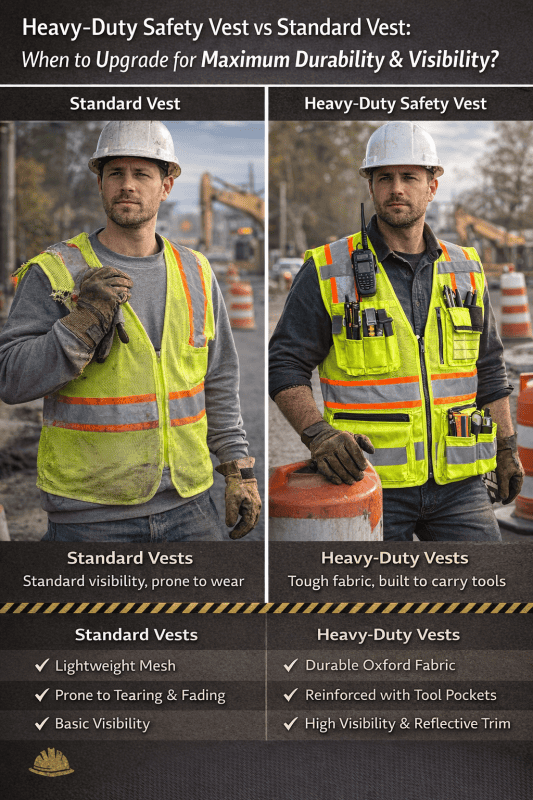
Durability matters just as much as visibility. PPE only protects workers if it stays intact and is worn consistently. Lightweight vests can tear, fade, or lose reflective tape, quickly becoming non-compliant or unusable. Heavy-duty safety vests are built to withstand daily wear, maintain visibility over time, and encourage consistent use.
Standard Safety Vests: Features & Limitations
Standard safety vests are low-cost, basic garments designed to meet minimum visibility requirements. They’re typically used for visitors, short-term tasks, or low-risk environments.
1. Construction & Design
- Lightweight polyester mesh for breathability, not durability
- Neon lime-yellow or orange background
- 2-inch silver reflective tape
- Common layout: two vertical shoulder stripes + one horizontal midsection stripe
- Usually meets ANSI Class 2
- Hook-and-loop (Velcro) or plastic snap closures
- Single-layer mesh with basic binding; no reinforced seams
2. Storage & Fit
- Little to no storage
- At most one small chest pocket
- Limited adjustability
- Loose fit may flap in the wind or snag on equipment
3. Cost
- $5–$10 per vest
- Ideal for temporary use or visitor wear
4. Durability Limitations
- Thin mesh tears easily
- Closures wear out quickly
- Reflective tape may peel or fade with washing or sun exposure
- Short lifespan under daily or heavy use
What Makes a Vest “Heavy Duty”?
A heavy-duty safety vest is designed for durability, load-bearing, and long-term use in demanding work environments. It goes far beyond basic visibility and functions as protective gear plus wearable storage.
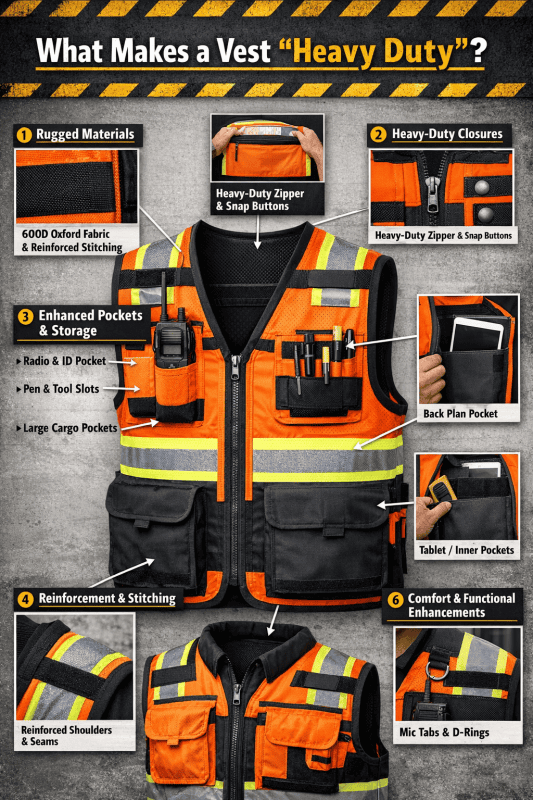
1. Rugged Materials
Heavy-duty vests use high-denier fabrics instead of lightweight mesh. Common materials include 300D or 600D Oxford polyester and solid polyester twill, especially in high-wear areas like the front and pockets. These fabrics resist abrasion and tearing, and support the weight of loaded pockets. Mesh, if used, is typically a thick utility mesh or combined with a solid backing. Reinforced stitching, binding, and webbing at stress points prevent premature failure.
2. Heavy-Duty Closures
Instead of basic Velcro, heavy-duty vests rely on full-length industrial zippers (often #5 or #8 gauge) or metal snap buttons. These closures stay secure in wind, traffic airflow, dirt, and mud, and won’t open under pocket load.
3. Enhanced Pockets & Storage
Storage is a defining feature. Heavy-duty (often “surveyor”) vests include multiple functional pockets, such as:
- Upper chest pockets (radio, ID window, or flap)
- Pen and tool slots
- Large front cargo pockets with flaps
- Interior pockets for tablets or clipboards
- Full-width back “plan pocket” with zipper
- Specialized holders for spray paint, water bottles, flagging tape, and keys
This allows workers to carry tools, plans, and gear without a separate tool belt.
4. Reinforcement & Stitching
Stress points like shoulders, edges, and pocket seams are reinforced with heavy binding, webbing, and double stitching or bartacks. Pocket interiors are often double-layered to prevent sharp tools from puncturing the fabric.
5. Load-Bearing Design
Heavy-duty vests are built to carry weight without sagging or tearing. Solid Oxford fronts support cargo pockets, while reinforced shoulders and yoke designs distribute load evenly. Some models include padded or quilted collars for comfort when fully loaded.
6. Comfort & Functional Enhancements
Despite their toughness, these vests prioritize wearability. Common features include:
- Solid front / mesh back for durability and airflow
- Adjustable sides (snaps or elastic) for a better fit
- Mic tabs, D-rings, or harness access points
- Two-tone designs (often with black panels) to hide dirt
Core Features of Heavy-Duty Safety Vests
Heavy-duty safety vests are built for rugged daily use, combining durable materials, secure closures, high-capacity storage, and all-day comfort far beyond standard mesh vests.
1. Material & Construction
Heavy-duty vests use a hybrid design rather than full mesh. Most feature a solid front panel made from 300D or 600D Oxford polyester or durable twill, paired with a mesh back for airflow. High-wear areas are reinforced with webbing, binding, and extra stitching at shoulders, edges, and pocket seams. Many designs include black or dark color-blocking on lower sections to hide dirt and extend service life.
2. Closure Systems
Instead of Velcro, heavy-duty vests use industrial-grade closures, typically full-length #5 or #8 zippers or metal snap buttons. These stay secure in wind, dust, and heavy use, with some models adding adjustable sides or breakaway points for fit and safety.
3. Pockets & Storage
Storage defines heavy-duty (often “surveyor”) vests. Most include 6–10+ reinforced pockets, such as:
- Large front cargo pockets
- Chest pockets for radios, pens, or ID
- Interior tablet/notebook pockets
- Full-width back plan pocket
- Specialized holders for spray paint, bottles, or flagging tape
Durable, double-layer pocket construction supports tool weight and often replaces the need for a tool belt.
4. Comfort Enhancements
Designed for long shifts, these vests feature padded necks/collars, mesh ventilation zones, and adjustable sides for a better fit. Extended sizing (M–5XL) allows layering while reducing snag risk.
Visibility & Compliance Standards
Upgrading to a heavy-duty safety vest does not reduce visibility. Most heavy-duty vests are designed to meet or exceed ANSI/ISEA 107 high-visibility requirements, just like standard vests.
- ANSI Class 1 (Type O – Off-Road)
- Lowest visibility level
- Minimal fluorescent material and reflective tape
- Intended for low-risk environments (warehouses, parking attendants)
- Traffic speed: under 25 mph
- Not suitable for construction or road work
- Heavy-duty vests rarely fall into Class 1
- ANSI Class 2 (Type R – Roadway)
- The most common and minimum standard for construction
- Required near traffic over 25 mph
- Minimum requirements:
- 775 sq in fluorescent background material
- 201 sq in retroreflective tape
- 775 sq in fluorescent background material
- Full vertical and horizontal reflective striping
- Common for road crews, utility workers, and job sites
- Most heavy-duty vests are Class 2 compliant
- ANSI Class 3 (Type R or P)
- Highest visibility level
- Required for traffic over 50 mph, night work, or poor visibility
- Designed for 360° visibility, including arm movement
- Visibility distance: 1,280 ft (¼ mile)
- Must include sleeves or be a vest-plus-sleeves/jacket system
- Used by highway workers, flaggers, and emergency responders
- Fluorescent & Reflective Requirements
- Fluorescent background colors: Lime-yellow or orange (daytime visibility)
- Retroreflective tape: Typically 2-inch silver
- Enhanced options include:
- Contrasting trim (“brilliant trim”)
- Segmented reflective tape for flexibility and breathability (still ANSI-compliant)
Comparing Top Heavy-Duty Vest Models
Heavy-duty safety vests vary by material strength, pocket layout, closure type, and compliance level. Below is a clear comparison of leading models used in construction and industrial work.
Key Model Highlights
- ML Kishigo Black Series 1515
- Material: Ultra-Cool™ polyester mesh with solid black bottom/trim
- Closure: Zipper
- Pockets: 2 cargo, 2 chest (ID + pencil), 2 interior
- ANSI: Class 2 (Type R)
- Best for: Professional look, dirt-hiding design, light-to-moderate tool carry
- Radians SV55 Heavy-Duty Engineer Vest
- Material: 300D Oxford solid front, mesh back
- Closure: #8 heavy-duty zipper
- Pockets: Radio pocket, pencil slots, 2 cargo pockets w/ grommets, 2 side can pockets, rear zip plan pocket, 2 inside tablet pockets
- ANSI: Class 2 (Type R)
- Notable: Padded neck, dual mic tabs, 2″ reflective tape with 1″ contrast trim
- Best for: Engineers, supervisors carrying plans and devices
- Radians SV59 Heavy-Duty Surveyor Vest
- Material: Mesh upper, solid twill lower; reinforced webbing
- Closure: Metal snap buttons (varies by version)
- Pockets: Large full-width back plan pocket, front cargo pockets, chest pockets, interior pockets
- ANSI: Class 2 (Type R) (also available in Class 1 black and Class 3)
- Best for: Contractors needing snap closures and maximum durability
- DeWalt DSV521 Heavy-Duty Vest (licensed by Radians)
- Material: Hi-vis mesh body, solid twill pockets
- Closure: Zipper
- Pockets: Radio/ID pocket, pencil pocket, cargo pockets, inside tablet pockets, full back panel pocket
- ANSI: Class 2 (Type R)
- Notable: D-ring harness pass-through, 2″ segmented reflective tape, dual mic tabs
- Best for: Workers using fall-protection harnesses
- GSS Safety 1715 Hyper-Lite (Black)
- Material: Smooth breathable black mesh, reinforced webbing
- Closure: Zipper
- Pockets: 2 large cargo pockets w/ grommets, 2 inside iPad-size pockets
- ANSI: Non-ANSI (enhanced visibility; roughly Class 1 equivalent)
- Best for: Non-roadway work where ANSI compliance isn’t required
Quick Comparison Table
| Vest Model | Material & Build | Storage Highlights | ANSI Class |
| Kishigo Black Series 1515 | Mesh + black reinforced bottom | 6 pockets, reflective trim | Class 2 (Type R) |
| Radians SV55 | 300D solid front, mesh back | Plan pocket, tablet pockets, can holders | Class 2 (Type R) |
| Radians SV59 | Mesh + solid twill, snap closure | Full-width back plan pocket | Class 2 (Type R) (also 1 & 3) |
| DeWalt DSV521 | Mesh body, solid pockets | Harness D-ring slot, segmented tape | Class 2 (Type R) |
| GSS 1715 (Black) | Reinforced black mesh | Cargo + iPad pockets | Non-ANSI |
How to Choose the Right Vest for Your Job
Use this checklist to select a heavy-duty safety vest that matches your work conditions, compliance needs, and daily tasks.
1. Work Environment
- High-speed roads/night work: Choose ANSI Class 3
- Construction & roadside work: ANSI Class 2 minimum
- Hot climates: Mesh panels, ventilated backs
- Brush, debris, rough surfaces: Solid fabric fronts (300D–600D)
- Special hazards: Look for FR, waterproof, or breakaway designs if required
- Color rules: Orange or lime, depending on industry (rail, airport, DOT)
2. Required ANSI Class
- Class 1 (Type O): Low-risk, off-road, < 25 mph (rare for construction)
- Class 2 (Type R): Standard for construction, traffic 25–50 mph
- Class 3 (Type R/P): High-speed roads 50+ mph, night or low visibility
Always check the ANSI/ISEA 107 tag before purchasing.
3. Storage Needs
Match pockets to what you actually carry:
- Radios → radio pocket + dual mic tabs
- Tablets/plans → inside tablet pocket + back plan pocket
- Tools/spray paint → cargo pockets, grommets, side can pockets
More pockets = more weight, so don’t overbuy.
4. Comfort & Fit
- Padded neck/shoulders for heavy loads
- Mesh backs for airflow
- Adjustable sides for layering
- Proper sizing for 8–10 hour shifts
5. Durability Features
- Fabric rating: 300D–600D Oxford or heavy twill
- Reinforced stitching, bar-tacked stress points
- #5 or #8 heavy-duty zippers or metal snaps
- Branded reflective tape (e.g., 3M)
- Grommets for drainage and tool tethering
6. Special Requirements
- Fall protection: D-ring harness pass-through
- Electrical or fire risk: Certified FR vest (NFPA / ASTM)
- Snag risk: Breakaway design
- Company policy: Color coding, role identification
Maintenance & Care Tips
Proper care keeps a heavy-duty safety vest ANSI-compliant, visible, and durable. Neglect shortens its lifespan.
1. Cleaning & Washing
Dirt and oil reduce fluorescent brightness and reflectivity.
- Wash cold or warm with mild detergent
- No bleach, fabric softeners, or harsh chemicals
- Hand wash or a gentle machine cycle
- Empty all pockets; close zippers/snaps
- Wash separately or with lightweight items
A dirty vest may lose ANSI compliance even if the tape remains intact.
2. Drying & Heat
Heat damages reflective tape.
- Air dry preferred
- Tumble dry low heat only
- Do not iron reflective or printed areas
- Avoid heaters or direct heat
3. Inspection
Check before use or weekly:
- Fabric tears or fraying
- Loose stitching
- Peeling or dull reflective tape
- Wear at the shoulders, zippers, and pocket seams
Flashlight test: reflective areas should “pop” in low light.
4. Storage
- Hang or store flat
- Don’t crumple in toolboxes or truck beds
- Store away from sunlight and sharp objects
UV exposure fades fluorescent color fastest.
5. Marking & Identification
- Don’t cover reflective or hi-vis areas
- Use heat-transfer or sewn PPE-approved markings
- Avoid solvent-based inks
- Place logos on black or non-critical panels
6. Lifespan & Replacement
Typical replacement guidelines:
- Daily outdoor use: 6–12 months
- Moderate use: 1–2 years
- Occasional use: 2–3 years
Replace immediately if brightness or reflectivity drops.
Frequently Asked Questions (FAQs)
1. What makes a safety vest “heavy duty”?
A heavy-duty safety vest uses tough fabrics (solid twill or 300D–600D Oxford), reinforced stitching/webbing, zipper or snap closures, and multiple load-bearing pockets to withstand rugged work environments.
2. What features should I look for in a heavy-duty safety vest?
Look for a solid front/mesh back, reinforced edges, padded neck, grommets, ANSI/ISEA 107 compliance, and a pocket layout suited to your tools and devices.
3. What’s the difference between a regular safety vest and a surveyor vest?
Regular vests focus on visibility only with minimal pockets.
Surveyor (heavy-duty) vests add specialized tool pockets, including tablet or backpack pockets, and are built for carrying gear.
4. What do ANSI classes mean for safety vests?
- Class 1: Low-risk, off-road work (< 25 mph)
- Class 2: Standard for construction and roadway work (25–50 mph)
- Class 3: Maximum visibility for 50+ mph, night, or low-light conditions